

Many parents and consumers worry about the safety of imported wet wipes. Stories of skin irritation and harmful chemicals circulate online, creating fear.
All imported wet wipes must meet strict safety standards set by regulatory bodies like the FDA (USA) and EU authorities. These organizations classify wipes based on use (cosmetic vs medical) and enforce different testing and labeling requirements.
 The safety of wet wipes depends entirely on meeting these government standards. Manufacturers who skip compliance checks put users at risk. But how exactly do these regulations differ between regions?
What's the FDA's approach to wet wipe safety?
The FDA takes wet wipe safety seriously but treats products differently based on their purpose. Many parents don't realize their baby wipes face different rules than antiseptic wipes.
The FDA regulates cosmetic wet wipes (like baby wipes) under the FD&C Act, requiring safe ingredients and proper labeling. Medical-grade wipes must undergo stricter 510(k) clearance or PMA approval processes.
The safety of wet wipes depends entirely on meeting these government standards. Manufacturers who skip compliance checks put users at risk. But how exactly do these regulations differ between regions?
What's the FDA's approach to wet wipe safety?
The FDA takes wet wipe safety seriously but treats products differently based on their purpose. Many parents don't realize their baby wipes face different rules than antiseptic wipes.
The FDA regulates cosmetic wet wipes (like baby wipes) under the FD&C Act, requiring safe ingredients and proper labeling. Medical-grade wipes must undergo stricter 510(k) clearance or PMA approval processes.
 Understanding these FDA categories helps explain why some wipes undergo more testing than others:
Cosmetic Wet Wipes
- Regulation: FD&C Act only
- Testing: No premarket approval
- Requirements:
Medical Wet Wipes
- Regulation: Medical device classification
- Testing: 510(k) or PMA required
- Requirements:
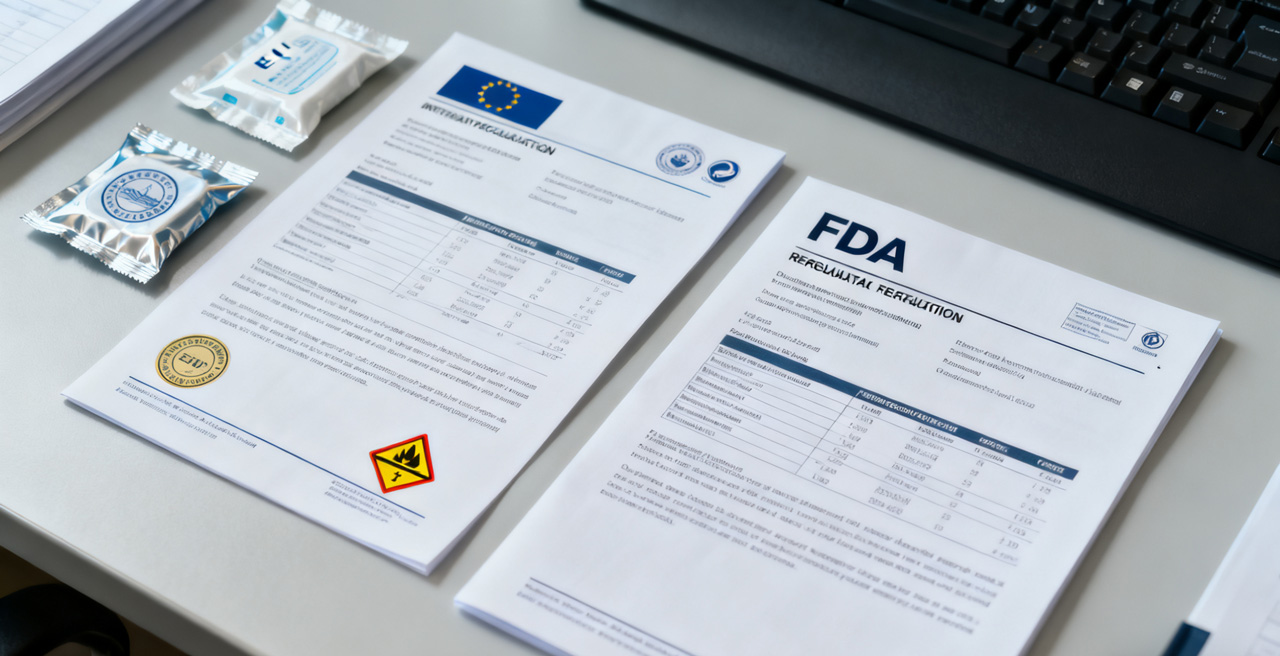 Three key differences stand out:
1. Broader Ingredient Restrictions
The EU prohibits many chemicals still allowed in U.S. wipes:| Chemical | EU Status | FDA Status |
|---|---|---|
| Parabens | Restricted | Allowed |
| MIT/MCIT | Banned | Limited use |
| Phenoxyethanol | Concentration cap | No restrictions |
2. Mandatory Safety Assessments
Unlike the FDA, the EU requires:- Full cosmetic safety reports
- Clinical studies for certain claims
- Animal testing ban (with exceptions)
3. EU Representative Requirement
All imported wipes need:- An EU-based compliance officer
- Product documentation in local languages
- Immediate reporting of adverse effects
 Practical examples highlight these challenges:
- 1. Preservative Reformulation
- 2. Label Conflicts
- 3. Testing Timelines